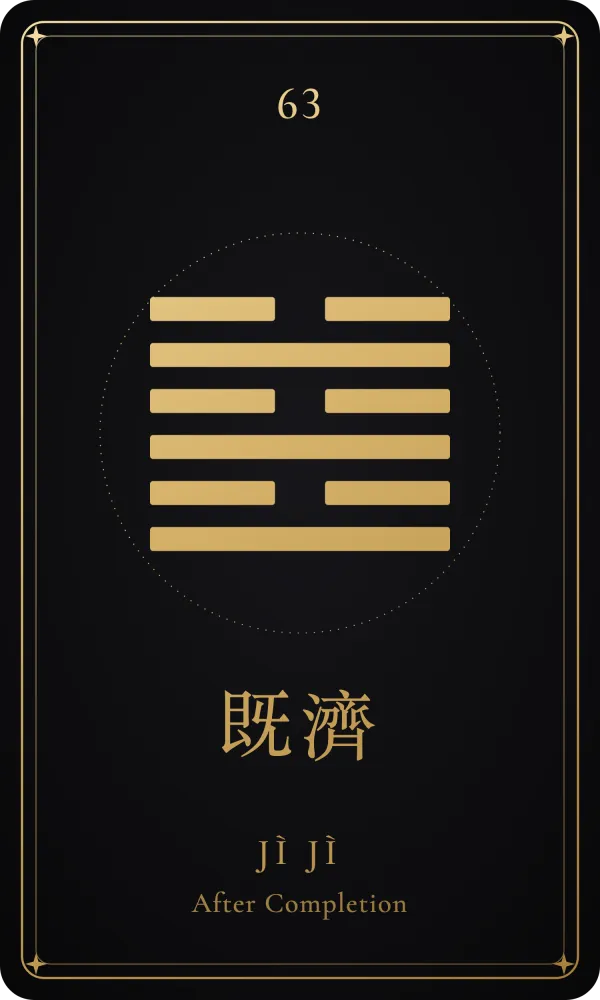
Hexagram 63: After Completion
 By Wendy Zhang, Founder of Solacely · Updated
既濟 · Jì Jì
After Completion. Success in small matters. Persistence is favorable. Good fortune at the beginning; disorder at the end.
The judgment
亨小。利貞。初吉終亂。
After Completion. Success in small matters. Persistence is favorable. Good fortune at the beginning; disorder at the end.
The image
水在火上,既濟;君子以思患而豫防之。
Water above fire: the image of After Completion. The noble person thinks about trouble and takes precautions against it.
Water sits above fire, each line in its proper place: yang in odd positions, yin in even. Everything is balanced, but balance is delicate and requires care.
What After Completion means
After Completion describes a moment when everything is in order: each line is in its correct place, and the work seems done. Yet the judgment warns: good fortune at the beginning, disorder at the end. Perfect balance cannot last; complacency invites decline. The Commentary on the Judgment notes that when completion is achieved, people tend to relax and stop striving. The Image asks you to anticipate trouble and prepare for it. For you now, this hexagram may describe finishing a project, reaching a goal, or stabilizing a situation. It counsels vigilance, maintenance, and humility. Small successes are possible, but avoid starting new ambitious ventures without care. Pay attention to details, keep systems in good repair, and remain alert. The lines show both caution and the risk of carelessness. Completion is not the end of effort; it is a new stage that requires mindful stewardship.
In love and relationships
A relationship may have reached stability or a milestone. Do not take it for granted now that it feels settled. Keep nurturing and communicating. Small acts of care prevent quiet drift. Singles may feel content on their own, which is good, but remain open and attentive to new possibilities.
At work
A project may be finished or a goal achieved. Turn your attention to maintenance, quality control, and preparing for future challenges. Complacency is the main risk. Small, regular improvements keep things running smoothly. Anticipate problems and fix weak points before they surface, rather than starting large new ventures.
The six lines
Read a line when it is a changing line in your cast (a 6 or a 9).
曳其輪,濡其尾,无咎。
He brakes his wheels and gets his tail wet. No blame.
He brakes his wheels and gets his tail wet. Commentators picture a fox crossing a river, holding back at the start. Just after completion, slowing down is wise. A small setback reminds you to proceed with care and not race ahead. Restraint at this early point prevents bigger mistakes and carries no blame at all.
婦喪其茀,勿逐,七日得。
The woman loses her carriage curtain. Do not chase it; in seven days she will get it back.
The woman loses the curtain of her carriage. Do not chase it; in seven days she will get it back. This central, correct line loses something that marks its status or privacy, perhaps because the ruler is slow to use it. Do not chase it anxiously. What is rightfully yours tends to return in time if you stay steady.
高宗伐鬼方,三年克之,小人勿用。
Gaozong attacks the Demon Territory and conquers it after three years. Do not use petty people.
Gaozong attacks the Demon Territory and conquers it after three years. Do not employ petty people. Great undertakings after completion take long, costly effort. Success may come, but it exhausts resources. Weigh any major campaign carefully, and choose your team well. Unreliable or self-serving helpers can undo even a hard-won victory.
繻有衣袽,終日戒。
The finest clothes turn to rags. Be alert all day long.
There are rags for plugging leaks in fine clothing; be on guard all day long. The image is a boat whose seams may open at any moment. Hidden weaknesses can surface even when things look perfect. Keep your repair materials ready, inspect regularly, and stay alert. Steady watchfulness is what keeps an orderly situation from springing a leak.
東鄰殺牛,不如西鄰之禴祭,實受其福。
The eastern neighbor slaughters an ox; it is not as good as the western neighbor’s simple offering, which truly receives the blessing.
The eastern neighbor slaughters an ox, but it does not match the western neighbor’s modest offering, which truly receives the blessing. Lavish display matters less than sincere simplicity, and timing matters more than size. The ruler is reminded that real devotion, not wealth, earns favor. Focus on authenticity and modesty, and the blessing follows.
濡其首,厲。
He gets his head wet. Danger.
He gets his head wet: danger. At the top of completion, you have gone too far, like a crosser who plunges in and is soaked to the head. Overconfidence after success is the risk now. Step back and reassess before you go deeper. Recognizing when to stop is what keeps danger from becoming disaster.
Advice
Guard what has been achieved by staying alert and preparing for trouble before it comes.
A question to reflect on
What success in my life needs careful maintenance to keep it strong?