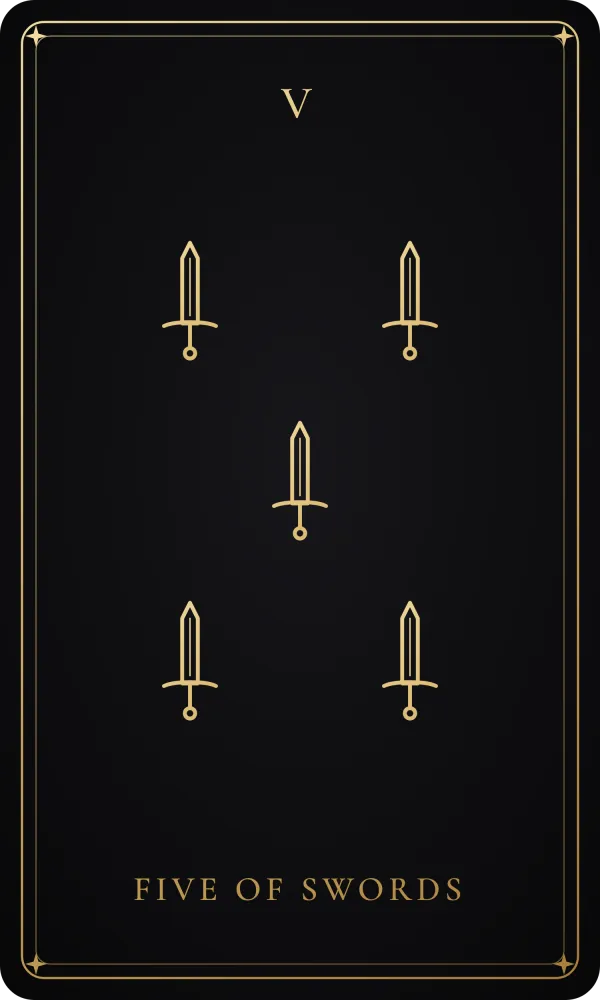
Five of Swords tarot card meaning
 By Wendy Zhang, Founder of Solacely · Updated
Upright: A conflict may be won, but at a cost; ask whether the victory is worth the damage it does to trust.
Reversed: The urge to fight is fading, opening the door to amends, though old resentment may still need attention.
conflict, hollow victory, winning at a cost, tension, self-interest
reconciliation, letting go of a fight, lingering resentment, making amends, walking away
Five of Swords upright meaning
The Five of Swords describes conflict where someone wins and someone loses, and often no one truly benefits. It may point to an argument where you were technically right but damaged the relationship, a workplace power play, or a situation where someone else is acting purely in their own interest. It can also describe the sting of being on the losing side. Venus in Aquarius hints at detached thinking that forgets the human cost. The card invites a sober question: what is this fight actually about, and what would a good outcome look like for everyone involved? Sometimes the strongest move is to concede a minor point, choose your battles, or walk away from a contest that cannot be won with dignity. If someone is behaving unfairly toward you, protect yourself without matching their tactics.
Five of Swords reversed meaning
Reversed, the dust is settling. You may be ready to end a feud, apologize, or accept that a fight is not worth continuing. This can bring genuine reconciliation, especially if both sides are willing to hear each other. At the same time, the reversal can reveal resentment that lingers after a conflict officially ends: replaying the argument, keeping score, or carrying a grudge into new situations. Occasionally it warns that a conflict could escalate if pride wins out. The way forward is to decide what you need in order to move on. That might be a conversation, an apology given or received, or simply the decision to stop feeding the story. Walking away is not always defeat; sometimes it is how you reclaim your energy.
Five of Swords symbolism
A man with a sly expression gathers three swords, two over his shoulder, while two more lie on the ground. In the distance, two defeated figures walk away toward the water, one with his face in his hands. Jagged clouds streak across a windy sky. The victor has the weapons, yet he stands alone. The scene asks whether winning matters if it leaves you isolated and the others humiliated.
Five of Swords in love
Arguments may be about winning rather than understanding. Sharp words, scorekeeping, or subtle manipulation can erode trust quickly. If you are single, be wary of someone who treats dating as a game. Ask whether being right is worth the distance it creates, and try listening longer than you defend. A softer question often ends the standoff.
The heat of a conflict is cooling. Partners may be ready to apologize and repair, though resentment will still need direct attention. If you are single, you may be letting go of a bitter breakup story. Forgiving does not mean forgetting what happened, but it frees you to move forward lighter.
Five of Swords in career
Office politics, fierce competition, or a colleague who cuts corners may be in play. Protect your work and keep good records. Avoid winning a point in a way that costs you allies, because your reputation will outlast any single argument or meeting. Let results speak louder than arguments.
Tensions at work may ease, offering a chance to clear the air with a colleague or manager. If a conflict cost you something, decide whether to repair the relationship or move on cleanly. Holding onto bitterness quietly drains the focus you need for your actual work.
Five of Swords with money
Be careful with deals that heavily favor one side or partners who play hardball. Read the terms closely and get agreements in writing. Avoid money disputes driven mainly by pride, since they tend to cost more than they recover.
A money dispute may be resolved or quietly dropped. Consider whether settling, even imperfectly, saves you more in time, stress, and legal costs than continuing to fight for every dollar.
Five of Swords as feelings
They may feel defensive, competitive, or hurt after a disagreement with you. Pride could be keeping them from admitting how they really feel, so their words may sound colder than their actual feelings.
They may regret past tension and feel open to making peace with you. Still, some resentment may sit beneath the surface, and they may need to hear acknowledgment before fully softening.
Is the Five of Swords yes or no?
Leans no. Conflict and hollow victories dominate this card, so the outcome leans toward no or a win that costs too much. Drawn reversed, it stays a no: the obstacle is still there, though it may be easing or internal. Ask a yes or no question.
The Five of Swords in a past or future position
Past: A conflict where winning cost more than it gained left its mark, and you may still feel its echo in how you trust.
Future: A clash of interests may arise, and choosing your battles wisely will matter more than winning every point.
Advice from the Five of Swords
Upright: Before the next exchange, decide what you actually want from it, and let go of points that only feed pride.
Reversed: Offer or accept a sincere apology, or consciously choose to walk away and stop rehearsing the argument.
A question to reflect on
Which battle in my life am I fighting to be right rather than to be at peace?
Draw a card for yourself
Questions about the Five of Swords
What does the Five of Swords mean?
A conflict may be won, but at a cost; ask whether the victory is worth the damage it does to trust. Its keywords are conflict, hollow victory, winning at a cost.
What does the Five of Swords reversed mean?
The urge to fight is fading, opening the door to amends, though old resentment may still need attention.
Is the Five of Swords a yes or no card?
Leans no. Conflict and hollow victories dominate this card, so the outcome leans toward no or a win that costs too much.
What does the Five of Swords mean in love?
Arguments may be about winning rather than understanding. Sharp words, scorekeeping, or subtle manipulation can erode trust quickly. If you are single, be wary of someone who treats dating as a game. Ask whether being right is worth the distance it creates, and try listening longer than you defend. A softer question often ends the standoff.
What does the Five of Swords mean as feelings?
They may feel defensive, competitive, or hurt after a disagreement with you. Pride could be keeping them from admitting how they really feel, so their words may sound colder than their actual feelings.